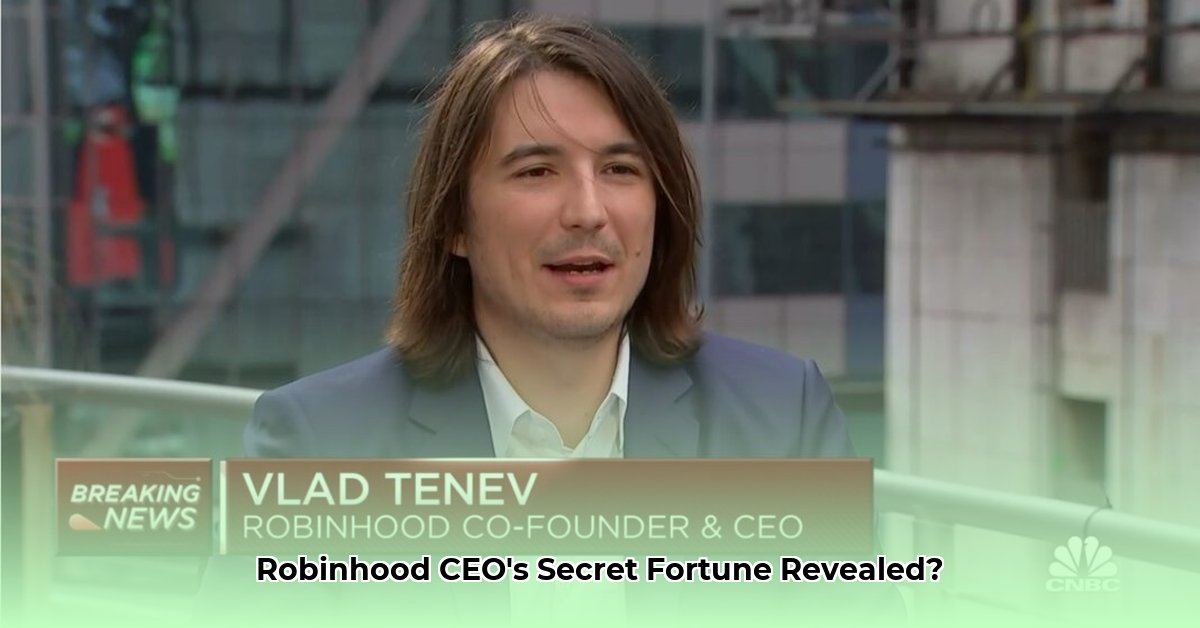
Vlad Tenev's journey from co-founding a disruptive brokerage app to navigating the turbulent waters of the public market is a compelling narrative interwoven with his fluctuating net worth. While pinning down a precise figure remains elusive, examining Robinhood's trajectory – its explosive growth, subsequent challenges, and regulatory scrutiny – provides insight into the factors shaping Tenev's considerable wealth.
The Robinhood Revolution and its Impact on Tenev's Fortune
Robinhood's commission-free trading platform democratized investing, attracting millions of users and transforming the financial landscape. This meteoric rise significantly boosted Tenev's net worth, initially making him a multi-millionaire. The company's subsequent Initial Public Offering (IPO) further amplified his wealth, but the volatile market presented both opportunities and risks. The subsequent decline in Robinhood's share price, however, served as a stark reminder of the inherent uncertainties in the financial sector. How much is he truly worth? It's a question with a complex answer.
Deconstructing Tenev's Wealth: A Multifaceted Equation
Estimating Tenev's net worth requires understanding its various components. His largest asset is undoubtedly his Robinhood stock ownership. However, the fluctuating market value of these shares makes precise calculation impossible. His salary, while substantial, constitutes a relatively small portion of his overall wealth. Finally, any personal investments outside of Robinhood remain undisclosed, adding another layer of uncertainty. This highlights the inherent challenges in assessing the net worth of individuals heavily invested in volatile assets. Does the market's perception of Robinhood's future accurately reflect Tenev's true financial standing? This question underscores the complexity of the situation.
Robinhood's Rollercoaster: A Direct Reflection of Tenev's Financial Picture
Robinhood's journey from startup darling to publicly traded company, complete with its share of controversies, has directly shaped Tenev's financial story. The firm's initial success translated into a substantial increase in his wealth, but the subsequent market downturn significantly impacted his net worth. This close correlation underscores the inherent risks associated with concentrating wealth in a single, high-growth company. What lessons can other entrepreneurs learn from Tenev’s experience, particularly regarding diversification and risk management? This serves as a case study for future entrepreneurs.
Analyzing the Uncertainties: Key Factors Influencing Tenev's Net Worth
The following table summarizes the key factors impacting Tenev's net worth, highlighting their degree of uncertainty. The dynamic nature of these factors prevents a definitive valuation.
| Factor | Influence on Net Worth | Uncertainty Level |
|---|---|---|
| Robinhood Stock Ownership | Dominant factor; value fluctuates with market performance. | Extremely High |
| Salary | Relatively small contribution compared to stock ownership. | Low |
| Other Investments | Unknown, but potentially significant. | Very High |
| Future Stock Options | Potential future gains from unexercised options. | High, dependent on future market performance and option terms. |
This complexity underscores the difficulty in arriving at a precise figure. The market's perception of Robinhood's future prospects significantly influences the valuation of Tenev’s holdings.
Beyond the Numbers: A Fintech Story
Vlad Tenev's story offers a compelling case study in the fintech revolution. His personal wealth, deeply intertwined with Robinhood's success and struggles, showcases both the immense potential and significant risks of building a disruptive company in a highly regulated industry. The narrative extends beyond a simple net worth calculation; it's a tale of innovation, market volatility, and the ever-evolving landscape of finance. It's a story still being written.
